Kindergarten focuses on crucial areas like representing numbers, describing shapes, and fostering independent reading habits for future success․
Kindergarten marks a pivotal stage in a child’s educational journey, laying the groundwork for all future learning․ The curriculum is intentionally structured to build rich content knowledge, spanning across grades and fostering essential skills․ A primary focus involves developing strong number sense, beginning with sets of objects, and exploring shapes and spatial reasoning․
Instructional time is strategically allocated, prioritizing number concepts over other subjects to ensure a solid mathematical foundation․ Simultaneously, cultivating independent and close reading habits is paramount, equipping students with the tools for lifelong literacy․ These standards, adopted by numerous states, represent best practices globally, offering a shared understanding of learning expectations for both educators and families․
The Pennsylvania Core Standards, implemented since 2014, and Ohio’s Learning Standards, emphasize lifelong learning and skills valued by employers, guiding the kindergarten curriculum․
Core Areas of Focus in Kindergarten
Kindergarten instruction centers around two critical areas: representing and comparing whole numbers, initially through hands-on experiences with object sets, and developing a strong understanding of shapes and spatial relationships․ A significant portion of instructional time is dedicated to number work, recognizing its foundational importance for future mathematical success․
Beyond mathematics, a core focus lies in nurturing literacy skills․ This involves fostering independent reading habits and cultivating the ability to engage in close reading – carefully analyzing texts for deeper comprehension․ These skills are not isolated; they are interwoven with STEM integration and social-emotional learning, creating a holistic educational experience․
The curriculum aims to instill qualities sought by today’s employers, preparing students for lifelong learning and adaptability, as highlighted by Ohio’s Learning Standards․
Pennsylvania Core Standards in Kindergarten
Pennsylvania Core Standards, adopted in March 2014, extend from Pre-Kindergarten through 12th grade, providing a consistent framework for learning․ These standards underwent revisions to incorporate updates, particularly in Science, Technology, Engineering, and Math (STEM) supportive practices, and reflect current research trends in early childhood education․

These Learning Standards for Early Childhood serve to inform educators about effective curriculum development and implementation․ In Kindergarten, the emphasis is placed on two key areas: representing and comparing whole numbers using concrete materials, and developing descriptive language for shapes and spatial understanding․
The standards, mirroring those adopted by 42 U․S․ states, draw from high-performing models globally, ensuring a shared understanding of learning expectations for both teachers and parents․

Ohio’s Learning Standards for Kindergarten
Ohio’s Learning Standards define the essential knowledge and skills that students should acquire from pre-kindergarten through grade 12, fostering a foundation for lifelong learning․ These standards are designed to instill qualities highly valued by today’s employers, emphasizing the application of skills to real-world learning experiences․
The curriculum is intentionally structured to build rich content knowledge both within and across grade levels․ A significant focus is placed on cultivating independent and close reading habits, recognizing their critical importance for future success․

These standards aim to provide a common understanding of expectations for students, aligning with best practices from across the United States and internationally, and supporting effective teaching and parental involvement․
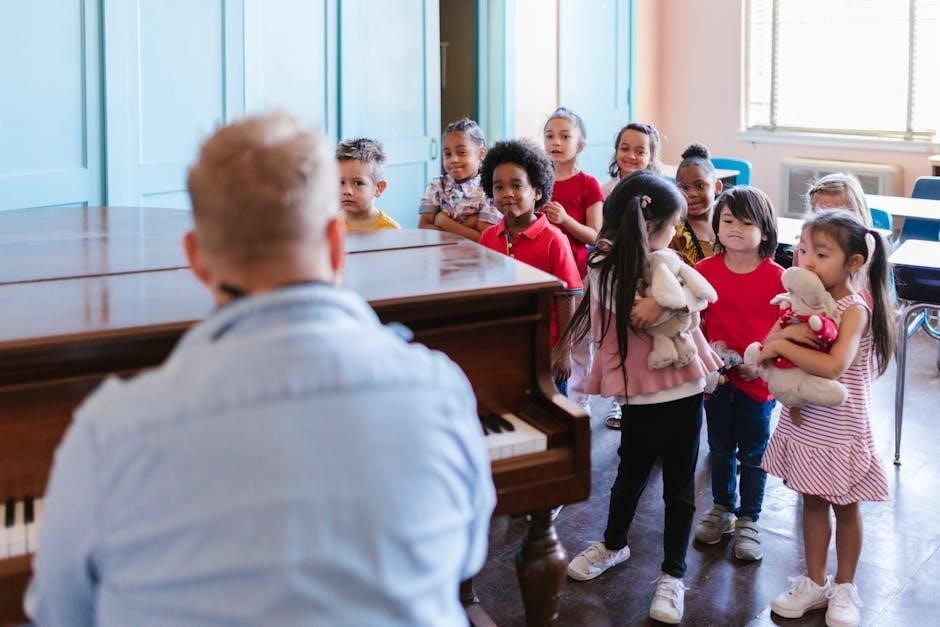
The Importance of Early Childhood Learning Standards
Early Childhood Learning Standards are vital tools, informing professionals about curriculum development and ensuring consistent educational experiences for young learners․ These standards, adopted by 42 U․S․ states and territories, represent the highest and most effective educational models from across the nation and around the globe․
They provide a shared understanding of what students should achieve, facilitating collaboration between teachers and parents․ The Pennsylvania Core Standards, for example, begin in Pre-Kindergarten and extend through 12th grade, with revisions incorporating STEM practices and current research․

Ultimately, these standards lay the groundwork for future success by establishing a strong foundation in essential skills and knowledge․
Alignment with Common Core State Standards
The standards utilized in kindergarten curriculum development are frequently aligned with the Common Core State Standards, currently adopted across a significant portion of the United States – 42 states and territories․ This alignment ensures a degree of consistency in educational expectations nationwide, providing a common framework for learning․
Pennsylvania’s Core Standards, for instance, have undergone revisions, denoted within the original Common Core framework, to reflect updates and advancements in educational research․ This deliberate structuring of the curriculum aims to cultivate rich content knowledge both within and across grade levels․
Such alignment supports a cohesive educational journey, preparing students for continued academic future success․
Kindergarten Math Curriculum
Kindergarten instructional time in mathematics should prioritize two key areas: representing and comparing whole numbers, initially through hands-on experiences with sets of objects․ This foundational work builds a concrete understanding of numerical concepts․
Furthermore, a significant portion of math instruction should be dedicated to describing shapes and spatial relationships․ Students begin to explore geometry and develop their understanding of the world around them․
The Pennsylvania Core Standards emphasize that more learning time should be devoted to number concepts than to other mathematical topics, recognizing the critical importance of early numeracy skills for future success․
Representing and Comparing Whole Numbers
A core component of kindergarten math involves students learning to represent quantities using numbers, including written numerals․ This begins with concrete experiences, utilizing sets of objects to illustrate numerical values and build foundational understanding․
Instruction focuses on developing the ability to compare whole numbers, determining which quantities are greater than, less than, or equal to each other․ This comparative skill is crucial for developing number sense․
The Pennsylvania Core Standards highlight this area as critical, emphasizing that initial work should center around sets of objects to solidify comprehension․ This early focus lays the groundwork for future success in more complex mathematical concepts․
Describing Shapes and Space
Alongside number work, kindergarten curriculum dedicates significant time to describing shapes and understanding spatial relationships․ Students begin to identify and name common two-dimensional and three-dimensional shapes, exploring their attributes like sides, corners, and faces․
This exploration extends to understanding spatial terms – above, below, beside, in front of, behind – and using them to describe the position of objects․ Manipulating shapes and building with blocks are common activities․
The Pennsylvania Core Standards recognize this as a critical area, alongside representing numbers, ensuring a balanced mathematical foundation․ Developing spatial reasoning skills is vital for future success in geometry and other STEM fields․
Kindergarten Literacy Curriculum
A cornerstone of kindergarten education is the development of foundational literacy skills․ The curriculum prioritizes cultivating both independent and close reading habits, recognizing these as essential building blocks for future success․ Students are introduced to the alphabet, phonics, and basic sight words, learning to decode and encode simple texts․
Emphasis is placed on reading aloud, shared reading experiences, and guided reading activities to foster a love of books and build comprehension skills․ Teachers model fluent reading and encourage students to actively engage with the text․
The intentional and coherent structure of the curriculum ensures rich content knowledge is developed alongside these crucial literacy foundations․

Independent Reading Habits
Cultivating independent reading habits in kindergarten is paramount, laying the groundwork for a lifelong love of learning․ The curriculum actively encourages students to select books based on their interests and reading levels, fostering a sense of ownership and motivation․
Dedicated classroom libraries, stocked with a diverse range of texts, provide ample opportunities for self-selection․ Teachers model independent reading behaviors and provide guidance on choosing “just right” books․
Students are given time to read independently each day, building stamina and fluency․ This practice, alongside close reading exercises, is vital for future success and comprehension․

Close Reading Skills Development
Close reading skills development in kindergarten centers on actively engaging with texts to unlock deeper meaning․ This involves rereading passages with a specific focus, such as identifying key details, understanding character motivations, or recognizing story structure․
Teachers model think-alouds, demonstrating how to annotate texts and ask probing questions․ Students participate in shared reading experiences, collaboratively analyzing texts and building comprehension strategies․
Activities include identifying the main idea, sequencing events, and making connections between the text and their own experiences․ These skills, coupled with independent reading, are essential for academic growth and future success․
Science, Technology, Engineering, and Math (STEM) Integration

STEM integration in kindergarten fosters curiosity and problem-solving skills through hands-on exploration․ It moves beyond isolated subject teaching, connecting scientific concepts with technological tools, engineering design processes, and mathematical thinking․
Activities might include building simple structures to understand stability, using measurement tools during science experiments, or coding basic commands to control robots․ The Pennsylvania Core Standards emphasize STEM supportive practices․
This approach encourages children to ask questions, make predictions, test ideas, and collaborate with peers․ Early exposure to STEM concepts builds a foundation for future success in these critical fields, preparing them for a rapidly evolving world․
Social-Emotional Learning in Kindergarten
Social-Emotional Learning (SEL) is a vital component of a well-rounded kindergarten experience, focusing on developing self-awareness, self-regulation, social awareness, relationship skills, and responsible decision-making․
Activities promoting SEL include group discussions about feelings, role-playing scenarios to practice empathy, and cooperative games that encourage teamwork․ Creating a supportive classroom environment where children feel safe to express themselves is paramount․
Strong SEL skills contribute to positive behavior, improved academic performance, and stronger relationships․ These skills are foundational for navigating social situations, managing emotions, and building resilience – essential qualities for future success and overall well-being․
Play-Based Learning in the Kindergarten Classroom
Play-based learning is a cornerstone of effective kindergarten education, recognizing that children learn best through active exploration and engagement․ This approach integrates learning into child-initiated and teacher-guided play activities․
Dramatic play, building blocks, art, and outdoor games provide opportunities for children to develop crucial skills like problem-solving, creativity, and social interaction․ Teachers facilitate learning by observing, asking questions, and providing materials that extend play experiences․
This method fosters a love of learning and allows children to construct knowledge in a meaningful way․ Play-based learning supports all areas of development, preparing children for future success by building confidence and a positive attitude towards education․
Assessment in Kindergarten
Assessment in kindergarten is a multifaceted process, moving beyond traditional testing to encompass ongoing observation and documentation of student learning․ It’s crucial for understanding each child’s developmental progress and informing instructional decisions․
Teachers utilize various methods, including anecdotal records, work samples, and checklists, to gather evidence of student understanding across all learning areas․ These formative assessments provide valuable insights into individual needs and guide differentiated instruction․
The goal isn’t simply to assign grades, but to monitor growth and adjust teaching strategies accordingly․ Effective assessment practices support a positive learning environment and ensure all children are on a path towards future success․
Curriculum Structure and Coherence
A well-designed kindergarten curriculum isn’t a collection of isolated activities, but rather a carefully structured and coherent learning experience․ It’s intentionally organized to build upon prior knowledge and progressively develop rich content knowledge within and across grade levels․
This coherence ensures that concepts are revisited and reinforced in meaningful ways, allowing students to deepen their understanding over time․ The curriculum should seamlessly integrate different learning areas, such as math, literacy, and STEM, to foster connections and promote holistic development․
Such a structured approach lays a strong foundation for future success, preparing students for the challenges of first grade and beyond, while instilling a love for learning․

The Role of Teachers and Parents
Effective kindergarten education thrives on a strong partnership between teachers and parents․ Teachers are responsible for implementing a research-based curriculum, providing engaging instruction, and assessing student progress, ensuring alignment with established learning standards․
Parents play a vital role in supporting their child’s learning journey at home․ This includes reading together, engaging in conversations about school, and reinforcing concepts learned in the classroom․ A common understanding of what students are expected to learn, as outlined by standards, is crucial․
Open communication and collaboration between teachers and parents create a supportive learning environment, maximizing each child’s potential for future success․
Resources for Kindergarten Curriculum Development
Developing a robust kindergarten curriculum requires access to diverse and reliable resources․ Organizations like KinderIQ offer online questions, skills worksheets, activities, and games specifically aligned with kindergarten education standards, supporting teachers in delivering effective instruction․
State Departments of Education, such as those in Pennsylvania and Ohio, provide detailed learning standards documents outlining expectations for student knowledge and skills․ These standards, often based on Common Core principles, serve as a foundational guide․
Furthermore, research trends in early childhood education offer valuable insights into best practices․ Utilizing these resources ensures a coherent and structured curriculum focused on future success․
Current Research Trends in Kindergarten Education
Current research emphasizes the critical importance of early childhood learning standards, informing curriculum development and professional practice․ The Pennsylvania Core Standards, updated in 2014, reflect these trends, integrating Science, Technology, Engineering, and Math (STEM) supportive practices․
A key focus is on fostering both cognitive and social-emotional learning, recognizing their interconnectedness․ Research supports prioritizing number sense and spatial reasoning in kindergarten math, alongside the development of independent and close reading habits․
Furthermore, play-based learning continues to be validated as a powerful approach, promoting engagement and deeper understanding․ These trends aim to prepare students for future success․
Kindergarten Curriculum: A State-by-State Overview
Kindergarten curriculum varies across states, yet a common thread exists in adopting high-quality learning standards․ Currently, 42 U․S․ states and territories utilize standards derived from the most effective models nationwide and internationally, ensuring a shared understanding of learning expectations․
Pennsylvania employs the Pennsylvania Core Standards, beginning in Pre-Kindergarten and extending through 12th grade․ Ohio utilizes its Learning Standards, instilling lifelong learning and equipping students with skills valued by employers․
These standards often align with, or are based upon, the Common Core State Standards, promoting coherence and consistency․ Resources like KinderIQ offer aligned materials, supporting educators and parents in navigating these state-specific frameworks․
Future Success and Kindergarten Foundations
A strong kindergarten foundation is undeniably crucial for future success․ The curriculum intentionally structures content knowledge, developing it both within and across grade levels, ensuring a cohesive learning experience․
Key areas like representing and comparing whole numbers, alongside describing shapes and space, build essential mathematical thinking․ Simultaneously, cultivating independent and close reading habits equips children with vital literacy skills․
These early skills aren’t isolated; they intertwine, fostering critical thinking and problem-solving abilities․ Standards, adopted widely across the US, aim to provide a common understanding of expectations, ultimately preparing students for continued academic growth and lifelong learning․
